
Project: Sidewalk Violation Removal in Queens
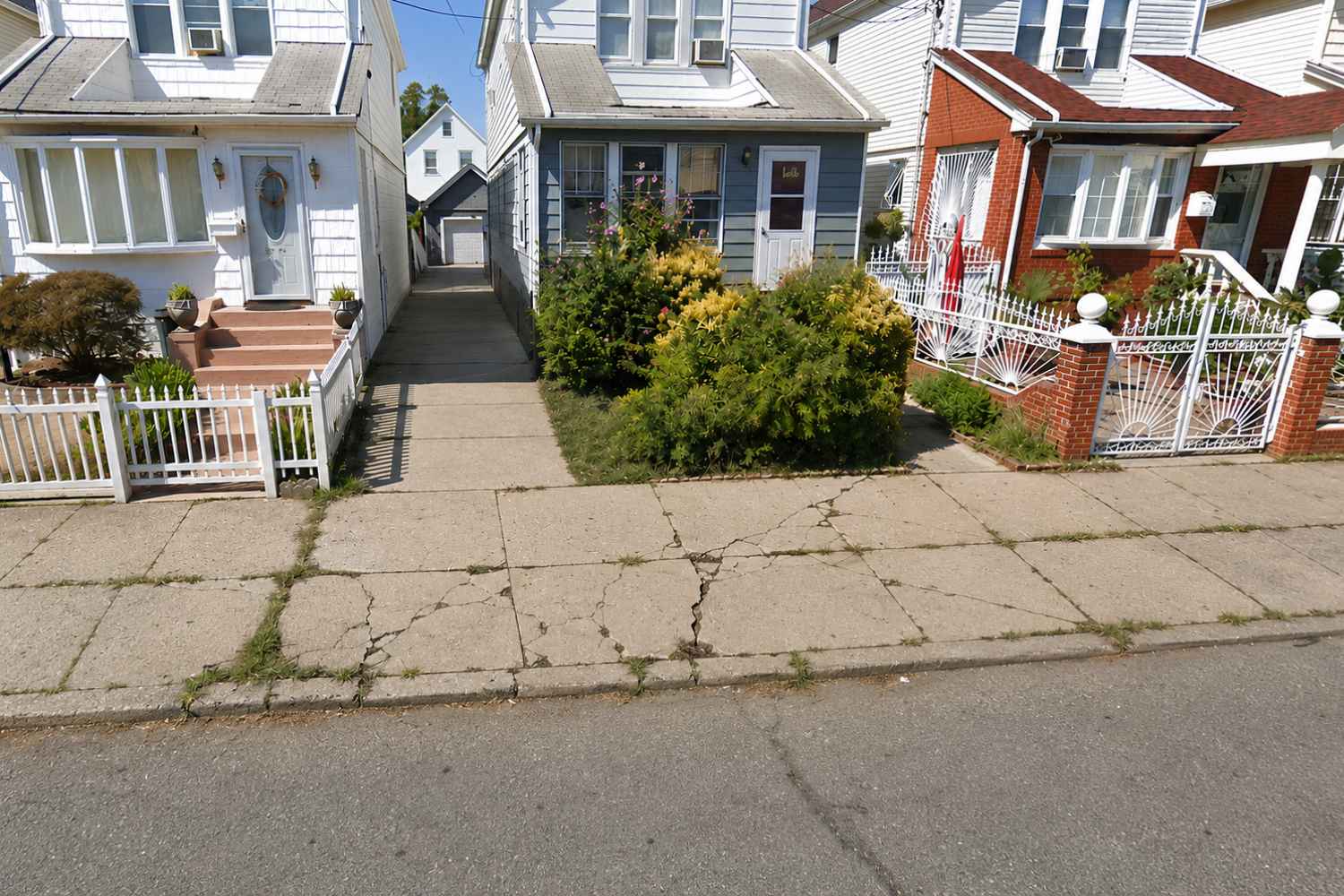
A sidewalk doesn't fail overnight. At 89-30 186th St in Jamaica Hills, years of small cracks had turned into an entry point for weeds, and what started as a cosmetic nuisance slowly became a structural problem. Water and root hairs worked their way into the joints season after season, foot traffic kept stressing the weak points, and eventually 12 separate slabs, close to 300 square feet of pavement, had crumbled past the point of any reasonable patch. The city flagged it, and the property owner was left staring down a compliance deadline with a sidewalk in far worse shape than a quick look from the street would suggest.
What Made This Project Different
The property presented its own set of challenges:
- Widespread Surface Failure: What looked like ordinary wear and tear turned out to be 12 separate slabs in need of full replacement, not a two- or three-flag repair.
- Weed-Driven Deterioration: Persistent weed growth through existing cracks had accelerated the breakdown, weakening the base beneath the concrete in ways that weren't obvious until the crew got a closer look.
- Active DOT Violation: The scale of the damage had already drawn a formal DOT violation, putting the owner on the clock under the standard 75-day compliance window.
- Neighborhood Foot Traffic: Sitting near Cunningham Park and surrounded by several busy residential corridors, the block sees a steady flow of walkers, joggers, and neighbors throughout the day, so the work needed to stay tightly contained.
- Permit Turnaround: Two permits had to be filed and approved before any concrete could be touched, and the owner wanted the process handled without having to track deadlines themselves.
Because the damage ran across 12 slabs rather than one or two, this called for a full-block replacement approach rather than a spot repair, backed by a permit process the owner could stay hands-off from.
How Our Crew Went Through the Process Step by Step
Step 1: Started with a Thorough Site Assessment (Day 0 – Day 1)
The project began after the property owner shared photos of the cracked, weed-covered walkway along with the DOT violation notice. Given the extent of the breakdown, 12 slabs across roughly 300 square feet, our team at Eden Sidewalk Contractors NYC NYC inspected the joint and base condition before sending back a clear, no-obligation estimate within 24 hours. The owner approved it online, and permit paperwork went in right away.
Step 2: Efficiently Navigated Permit Filing (Day 2 – Day 9)
With the estimate signed off, we filed the Sidewalk Construction/Repair Permit and Sidewalk Closing Permit with NYC DOT. Since the property sits outside any historic district and has no tree-related complications, the filing moved through review faster than a multi-agency job would. Our team at Eden Sidewalk Contractors NYC tracked both permits to approval and slotted the repair into a work window that fit the rhythm of the block, without the owner needing to check in on progress.
Step 3: Executed Code-Compliant Sidewalk Replacement (Day 9 – Day 11)
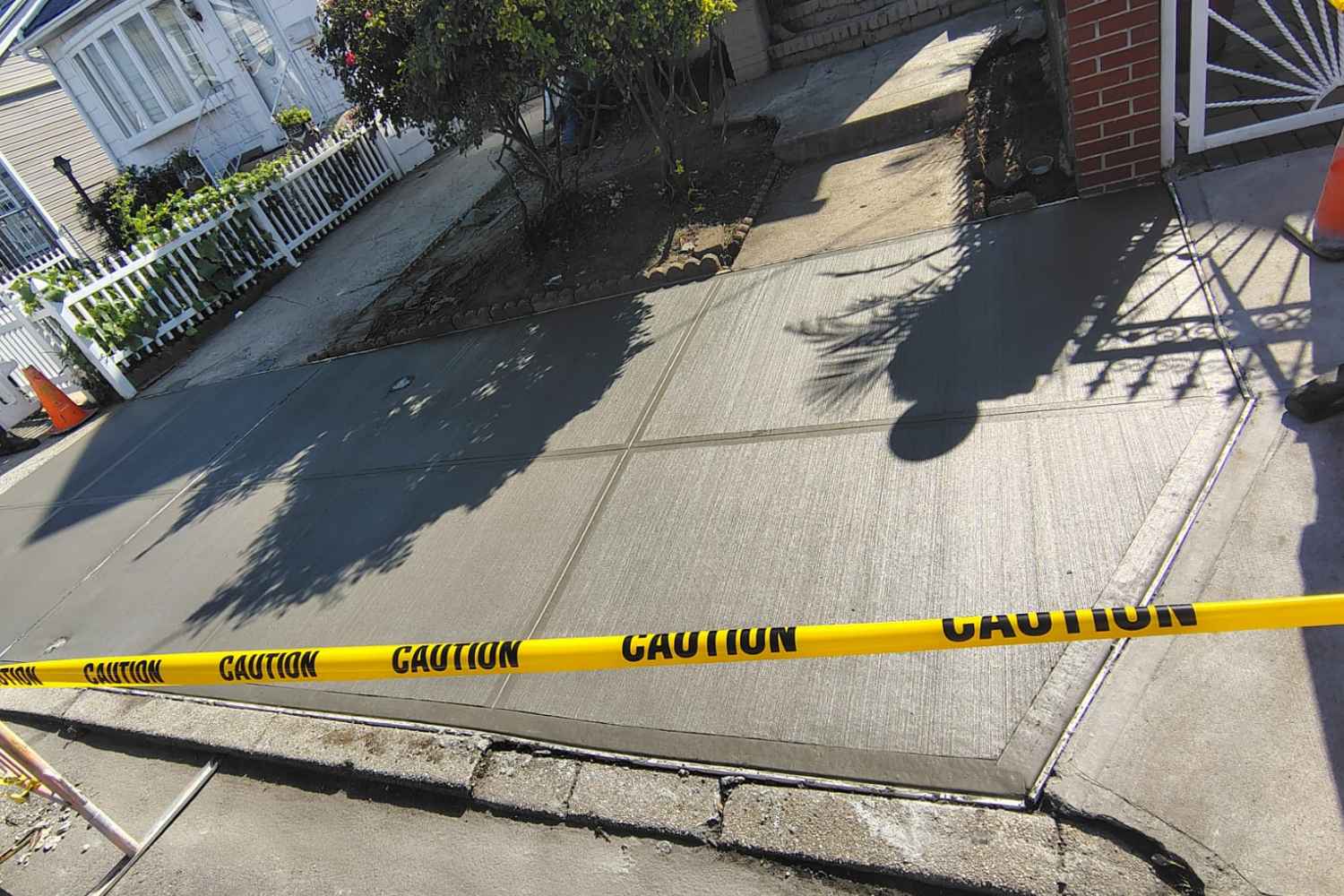
Once permits cleared, the crew mobilized to break out all 12 damaged slabs, clearing away root hairs and weed growth from the sub-base as they went. A new compacted base was laid across the full 300-square-foot area, followed by a fresh pour of 4000 PSI concrete finished to NYC DOT specifications. Safety barriers stayed up around the work zone throughout, and the crew cleaned the site thoroughly at the end of each day. The full replacement wrapped in two days.
Step 4: Closed-off Violation after Final Inspection (Day 11 – Day 50+)
After the concrete finished curing, our team scheduled and attended the final DOT inspection on the owner's behalf. The repair passed on the first inspection with no follow-up work needed, officially closing out the violation and clearing the property's compliance record.
Final Outcome After Restoration
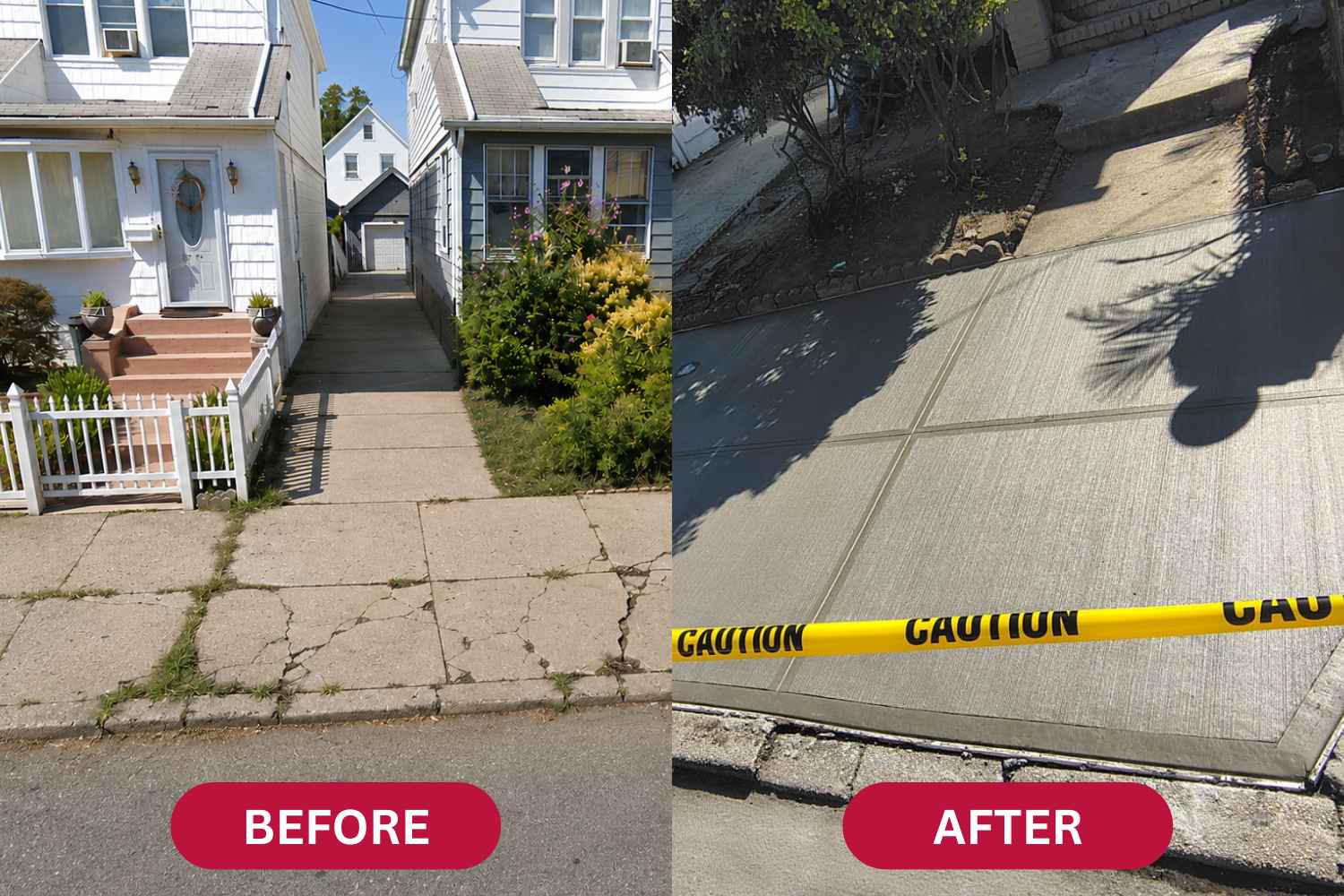
Before:
- Twelve sidewalk slabs, close to 300 square feet, were cracked, crumbling, and overtaken by weed growth.
- An active NYC DOT violation carried a firm compliance deadline.
- The broken surface created a real trip hazard along a heavily walked stretch near Cunningham Park.
- The property owner faced two permit filings with no clear guidance on timing.
- The front walkway detracted from the overall look of the property.
After:
- A full 300 square feet of smooth, level, DOT-compliant concrete now runs across the frontage.
- The DOT violation was fully resolved, bringing the property back into compliance.
- A safer, even walking surface for residents and neighborhood foot traffic.
- The entire process, from estimate through final inspection, required minimal involvement from the owner.
- The property's curb appeal was restored along with its compliance status.
Project Impact
This project gave a Queens property owner a clean resolution to a violation that covered more ground than most routine repairs. Replacing all 12 damaged slabs within the compliance window protected the owner from fines, a city-ordered repair bill, or a lien against the property. Because the base beneath the old concrete was cleared of weed roots and properly recompacted, the new sidewalk is built to hold up far longer than a surface-level patch would have.
The two-permit process, handled entirely by our team from filing through DOT sign-off, meant the owner never had to track a deadline or fill out a form. They were kept in the loop at each stage while the actual coordination stayed off their plate.
The result is a Jamaica Hills sidewalk that's level, solid, and fully compliant, with the violation cleared and the block's frontage looking the way it should.
Words From the Property Owner
The property owner shared the following after the project wrapped:
"I knew the sidewalk was rough, but I didn't realize how many slabs actually needed to go until Eden walked me through it. They handled both permits without me having to follow up once, and the crew finished the whole thing in two days. It's such a relief to have that violation off the books."
Conclusion
The sidewalk violation removal at 89-30 186th St shows how Eden Sidewalk Contractors NYC handles larger-scale repairs without adding stress for the property owner. By pairing a fast, transparent estimate with efficient permit coordination and a properly rebuilt base, the team resolved a significant violation and gave a Jamaica Hills property a walkway built to last.