
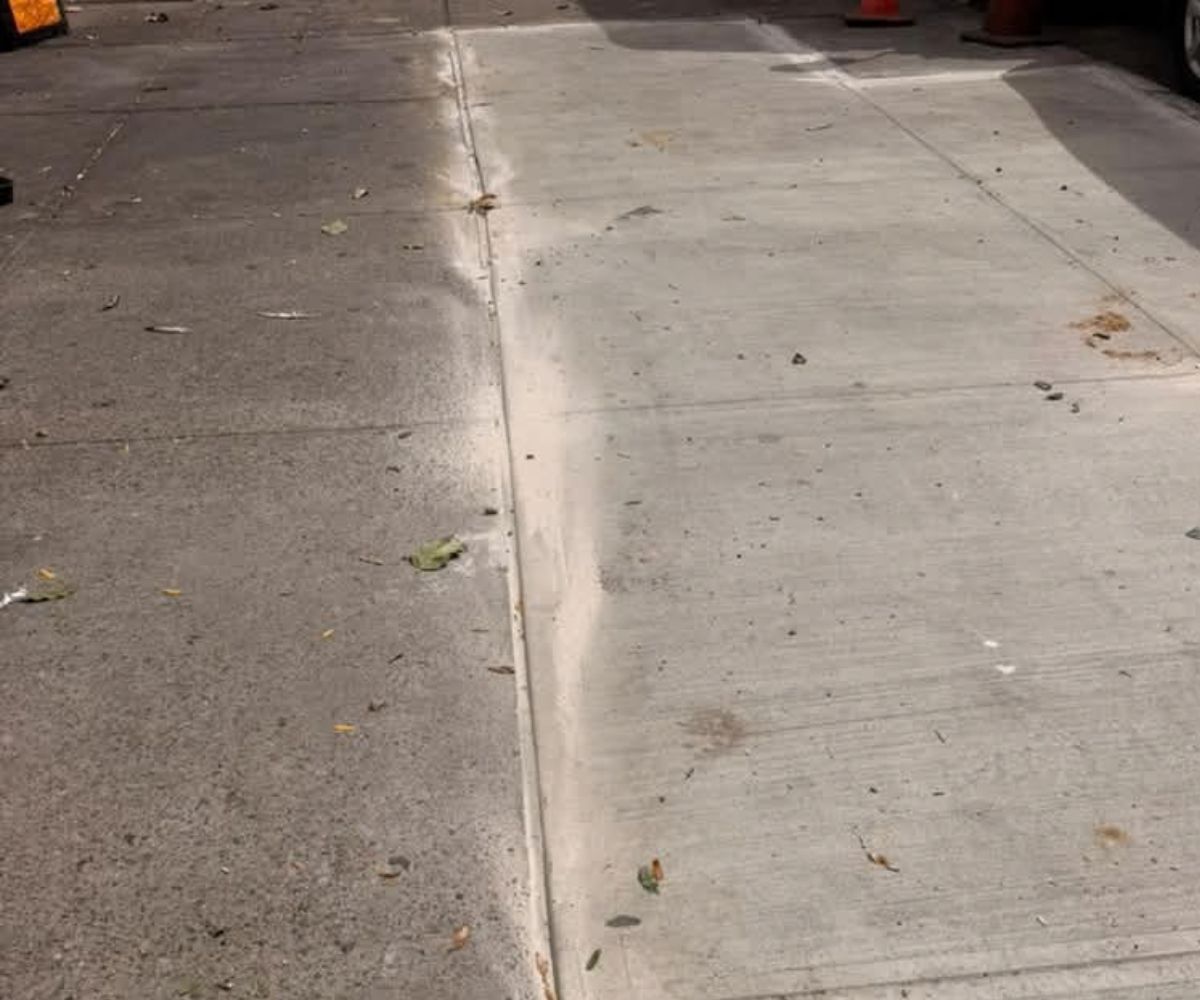
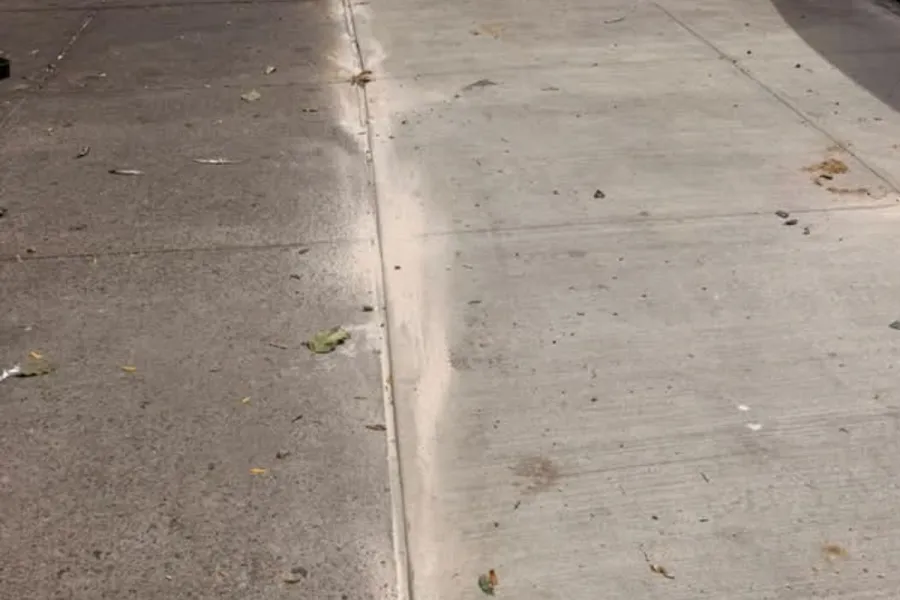
Utica Ave never really empties out. Customers come and go all day, vehicles pull in and out, and the concrete underfoot takes all of it. In front of 69 Utica Ave, a two-story mixed-use building in Crown Heights, nine slabs had worn through. The city noticed before the owner could get ahead of it and issued a sidewalk violation. Waiting for the city to do the repair instead runs about three times the price, and it can come back as a lien on the property.
Job Snapshot
Why This One Needed a Plan
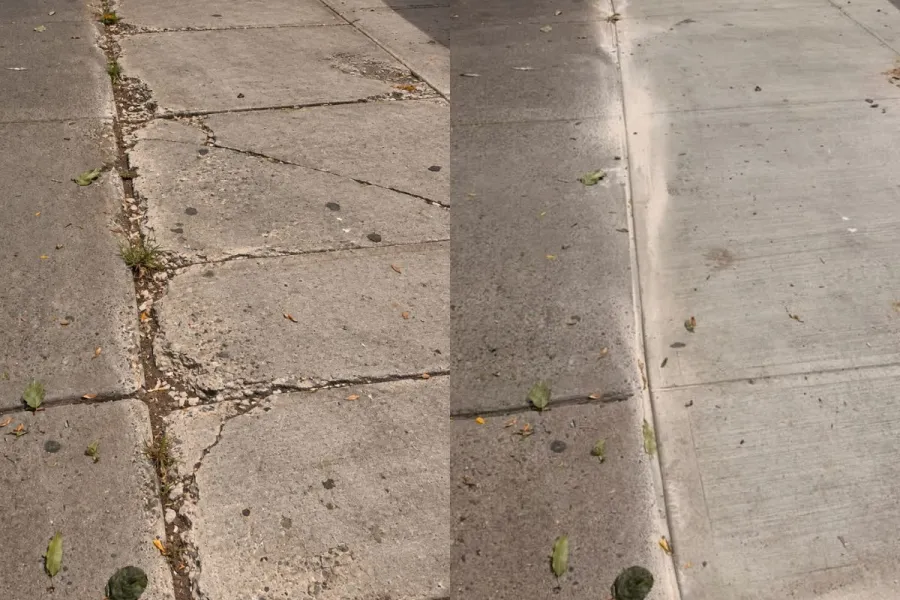
- The frontage works harder than most. Utica Ave carries steady foot and vehicle traffic, so these slabs aged faster than they would on a quiet residential street.
- The damage was wear, not one bad break. Years of use had broken the surfaces down and left them uneven, which is a trip hazard for anyone walking to the store or the front door.
- Nine slabs in a row. That much concrete has to come out in the right order, or the storefront and the residential entrance get cut off while the crew works.
- The deadline was already running. A violation starts the 75-day clock described in the NYC DOT sidewalk rules.
- A business and a home at one address. Noise, dust, and closures had to stay low for the shop at street level and the residents above it.
Most of our sidewalk repair work in Brooklyn looks like this. The concrete is the easy part. Keeping a business open and a building reachable while you replace the ground in front of it takes the planning.
How the Job Ran
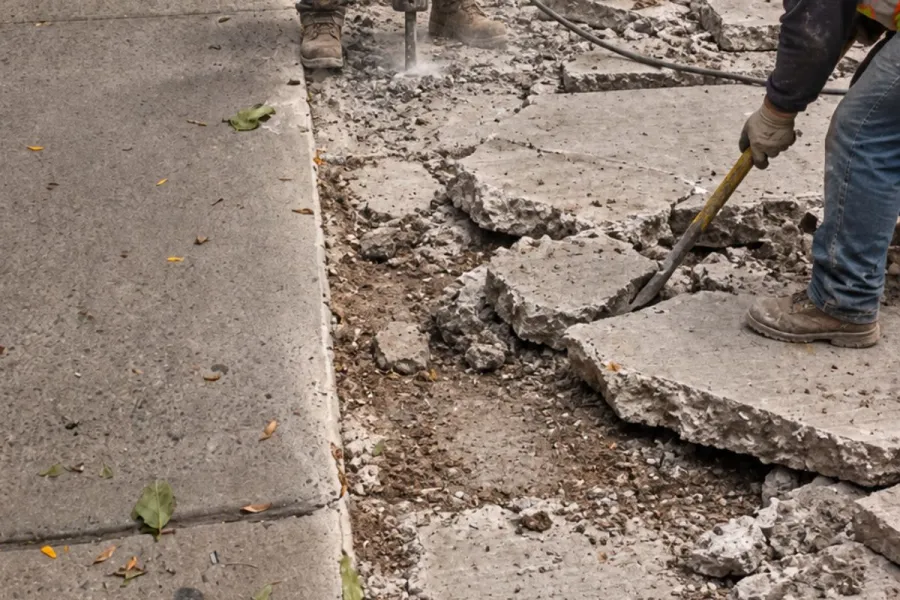
Looking at it in person (Days 0 to 1)
The owner sent over the violation notice and photos of the frontage. A crew from Eden Sidewalk Contractors NYC came out, counted and marked all nine failed slabs, and checked how the rest of the walkway was holding up. The estimate went back within 24 hours. Once the owner approved it, we started the permit paperwork.
Filing with the city (Days 2 to 14)
We filed the Sidewalk Construction/Repair Permit and the Sidewalk Closing Permit with NYC DOT. We also pulled the 811 utility markout so every underground line was located before anyone broke ground. All of it went through our office, with updates to the owner along the way. When the approvals landed, we picked a work window that left the storefront and the block alone as much as possible.
Out with the old, in with the new (Days 14 to 16)
The crew pulled all nine damaged slabs on the first morning. We compacted a proper base across the whole run, then poured 4000 PSI concrete and finished it to NYC DOT standards. Barriers kept pedestrians moving safely around the work zone. The replacement was done in two days.
Getting it signed off (Day 16 onward)
Once the concrete cured, we set up the final DOT inspection and handled it for the owner. That closed the violation and put the property back in compliance, well inside the window.
Before and After
What we started with
- Nine slabs along the frontage, worn down, uneven, or broken up.
- An open NYC DOT violation with a hard deadline attached.
- A tripping risk for customers, residents, and anyone walking past.
- Two sidewalk permits and an 811 markout that someone had to file and track.
What the owner has now
- One continuous run of level, DOT-compliant concrete across the frontage.
- A violation that is closed out.
- Safer footing for shoppers, tenants, and neighbors.
- A project that took almost nothing off the owner's plate.
What It Saved
Left alone, this violation could have turned into fines, a city repair bill, or a lien. Replacing all nine slabs inside the compliance window kept the job under the owner's control and cost far less than the city's version of the same work.
On a mixed-use property, the sidewalk is also the front door of a business. Scheduling around store hours kept customers walking in and kept the residential entrance clear for tenants. The two permits and the markout, which is usually the part owners dread, stayed with our licensed crew from the first filing to the final DOT sign-off.
The frontage is solid, safe, and compliant again. For a Brooklyn job where the trouble started below the surface instead, read how we cleared a violation caused by tree roots without losing the tree.
In the Owner's Words
"Honestly, didn't think this would be so painless. Eden took care of the permits, the DOT paperwork, everything. They were in and out in two days, and the store stayed open the whole time. Sidewalk looks great, and the violation is gone."
Property owner, Crown Heights, Brooklyn
The Short Version
Nine slabs, two permits, one markout, and two days on site at 69 Utica Ave. A quick estimate, paperwork handled in-house, and a single trip for the repair cleared the violation and left this Crown Heights building with a sidewalk that can take the traffic it gets.