
Project: Sidewalk Violation Removal in Brooklyn,
A stretch of sidewalk in front of a landmarked townhouse isn't just a concrete path, but it's part of the block's identity. At 375 6th Ave in Brooklyn's historic district, a mature street tree had spent years pushing against the pavement below, and the damage had finally caught up: eight slabs, roughly 200 square feet in total, had buckled, cracked, and lifted into a serious hazard right along the property's frontage. The city had taken notice too, issuing a DOT violation that started the countdown on the property owner's compliance window. With a historic district designation adding another layer of approval requirements, this wasn't a simple patch job. It called for a repair plan that addressed the root cause across a much larger footprint without disturbing the character of the block as well as the tree responsible for the damage.
What Made This Project Different
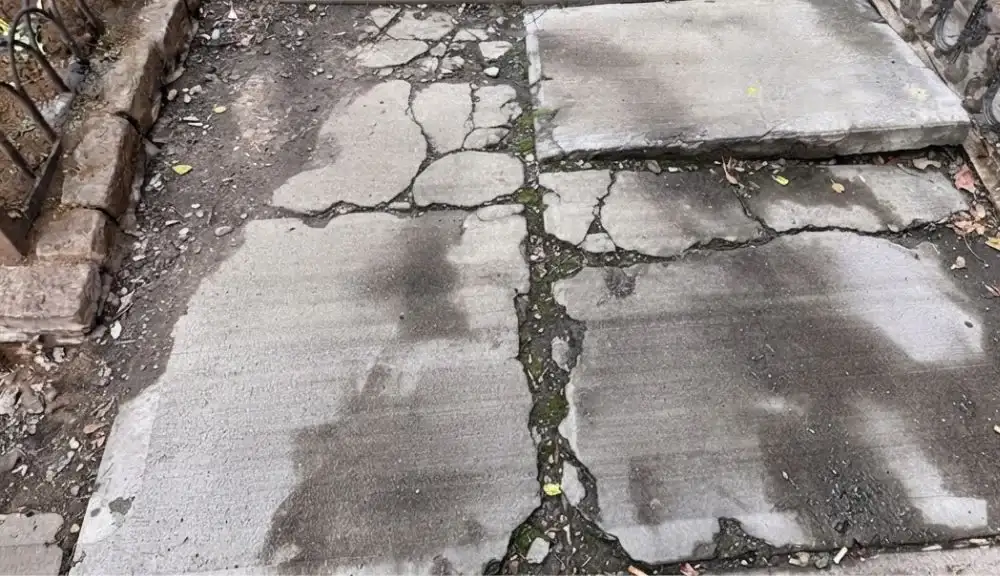
- Widespread Root Damage: A nearby tree's root system had spread beneath a long run of sidewalk, cracking and displacing eight separate slabs rather than an isolated section, making this a larger-scale structural repair.
- Active DOT Violation: The extensive damage had already triggered a NYC DOT violation, starting the standard 75-day compliance clock, after which the city could step in with its own repairs and fines.
- Historic District Restrictions: Because the townhouse sits within a designated historic district nearby Park Slope, sidewalk work required LPC review and approval for matching materials and finishes, on top of standard DOT permitting.
- Residential Block Sensitivity: With neighbors and passersby moving along the block throughout the day, the larger scope of work, eight slabs instead of one or two, meant the crew needed a tighter plan to keep noise, closures, and mess to a minimum.
- Permit Coordination: Four separate permits needed to be filed and tracked in parallel, a burden the property owner didn't want to manage without guidance.
The scale of the damage meant we couldn't treat this as a routine slab swap. It required a coordinated approach spanning inspection, multi-agency permitting, and a repair sequence built to protect both the tree and the historic streetscape.
How Our Crew Went Through the Process Step by Step
Step 1: Started with a Thorough Site Assessment (Day 0 – Day 1)
The project began when the property owner sent photos of the damaged frontage along with the DOT violation notice. Given the extent of the damage, eight slabs across roughly 200 square feet, our team at Eden Sidewalk Contractors NYC conducted a careful review of the root intrusion pattern before returning a detailed, no-obligation estimate within 24 hours. The owner reviewed and approved it digitally, and documentation for permitting began immediately.
Step 2: Efficiently Navigated Permit Filing (Day 3 – Day 16)
With the estimate approved, we filed the Sidewalk Construction/Repair Permit and Sidewalk Closing Permit with NYC DOT alongside the LPC Permit required for work within the historic district and the NYC Parks Department Permit tied to the tree root removal. Because of the historic designation, material specifications needed sign-off to ensure the replacement slabs matched the surrounding streetscape. Our team managed each filing directly, keeping the owner updated without requiring them to navigate the process themselves. Once approvals came through, the repair was scheduled for a window that respected the rhythm of the residential block.
Step 3: Executed Code-compliant Sidewalk Replacement (Day 16 – Day 18)
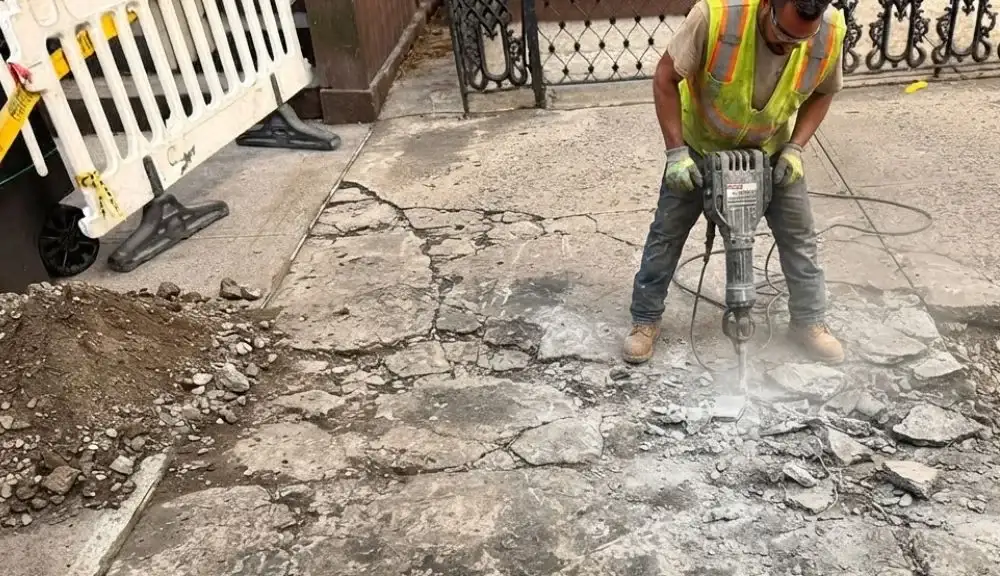
On the scheduled start date, the crew mobilized to remove all eight damaged slabs, working carefully around the tree's root structure to avoid unnecessary harm to its health. Root pruning was performed, and protective barriers were installed to minimize root growth while keeping in mind NYC Parks tree root safety guidelines. A properly compacted base was laid across the full 200-square-foot area, followed by a fresh pour of 4000 PSI concrete finished to match NYC DOT and LPC standards. Pedestrian safety barriers were maintained throughout, and the site was cleared and cleaned at the end of each work day. Despite the larger scope, the crew completed the physical work in two days.
Step 4: Closed-off Violation after Final Inspection (Day 18 – Day 60+)
Once the new concrete had cured, our team coordinated the final DOT inspection on the owner's behalf. We remained on standby to address any adjustments the inspector might have requested at no extra cost to the owner, but the repair passed on the first inspection, closing out the violation and bringing the property into full compliance.
Final Outcome After Restoration
Before:
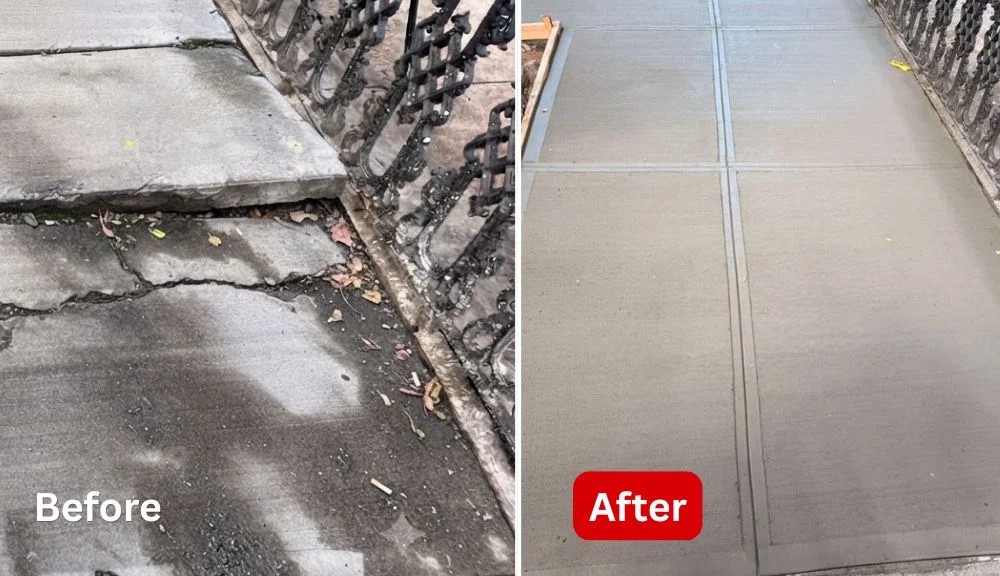
- Eight sidewalk slabs, roughly 200 square feet, were cracked and displaced by aggressive tree root growth.
- An active NYC DOT violation carried a firm compliance deadline.
- The uneven, damaged sidewalk posed a real trip hazard along a heavily walked residential block.
- The property owner faced the prospect of coordinating four separate permits without guidance.
- The historic townhouse's curb presence was diminished by the extensive visible damage.
After:
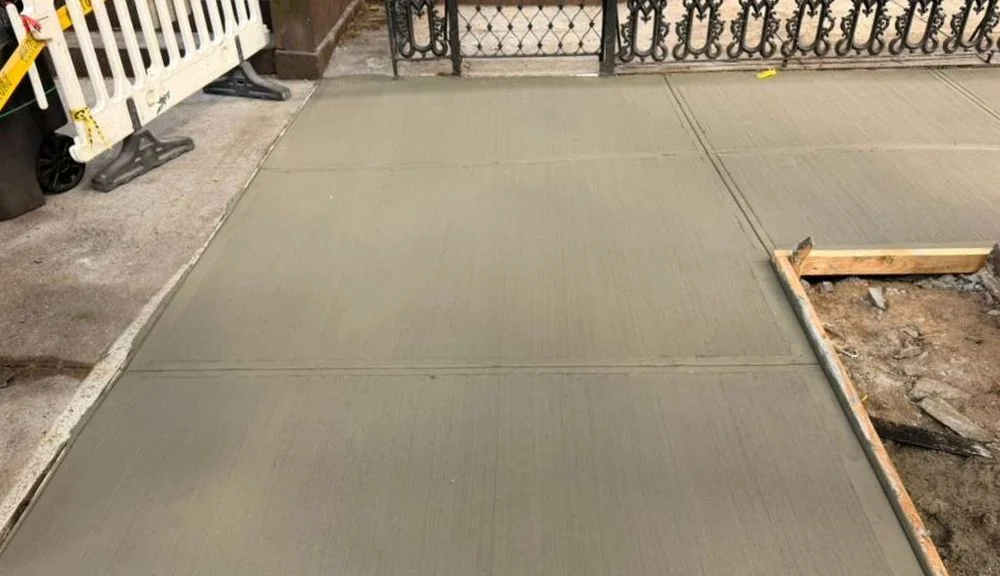
- A full 200 square feet of smooth, level, DOT- and LPC-compliant concrete now spans the frontage.
- The DOT violation was fully resolved, bringing the property back into compliance.
- A safer walking surface for residents, neighbors, and visitors to the block.
- The entire process, from estimate through final inspection, required minimal hands-on involvement from the owner.
- The townhouse's historic character was preserved while its sidewalk was brought fully up to current standards.
Project Impact
This project delivered real relief for a property owner facing a larger-than-average violation. Resolving all eight damaged slabs within the compliance window protected the owner from fines, city-performed repair costs, or a lien on the property. Because the repair addressed the root intrusion directly rather than patching around it, the new concrete is far less likely to see the same damage recur in the years ahead.
The four-permit process, often a source of frustration for property owners tackling historic district work alone, was handled entirely in-house by our team, from filing through LPC material approval to final DOT sign-off. The owner was kept informed at each stage without needing to manage a single form themselves.
The result is a historic Brooklyn townhouse frontage that once again matches the quality and character of the block it sits on, safe, solid, and fully compliant.
Words From the Property Owner
The property owner shared the following after the project's completion:
"Dealing with a violation across almost the entire front of our building felt overwhelming at first, especially with the historic district rules on top of it. Eden took care of all four permits without us having to chase anything down, and the crew got the whole sidewalk redone in just two days. It looks fantastic, and it's such a relief to have the violation cleared."
Conclusion
The sidewalk violation removal and eight-slab replacement at 375 6th Ave shows how Eden Sidewalk Contractors NYC manages larger-scale, multi-permit repairs in historically sensitive areas without adding stress for the property owner. By pairing a fast, transparent estimate with thorough permit coordination and root-aware repair work, the team resolved a significant violation and restored a Brooklyn historic townhouse's frontage in a matter of weeks.